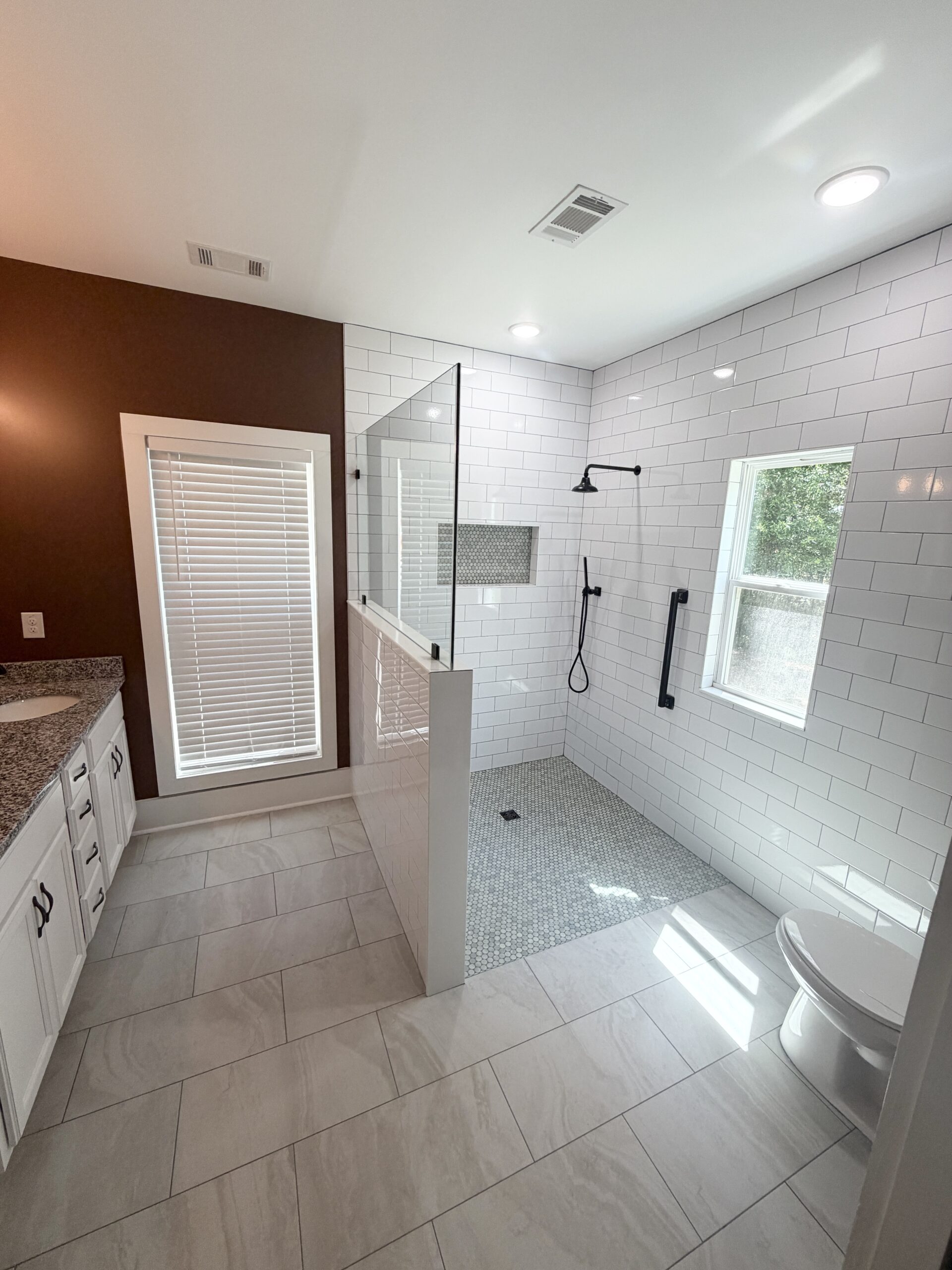

For most Gwinnett County homeowners remodeling a primary bathroom, a walk-in shower is the better choice — it’s what current buyers expect, it uses space more efficiently, and it requires less long-term maintenance. But it’s not the right call for every household, especially homes with young kids or a single full bathroom that needs to serve multiple needs.
The Case for a Walk-In Shower
What Buyers Actually Want in 2026
In primary bathrooms specifically, walk-in showers have become the default expectation in most Atlanta-area listings above the median price point. Real estate agents we work with regularly flag an outdated tub-shower combo in a primary bath as a point buyers mentally deduct value for, even if they don’t say so directly.
Accessibility and Aging in Place
A curbless or low-threshold walk-in shower is significantly safer for anyone with mobility concerns, and it’s one of the more common upgrade requests we get from homeowners planning to stay in their house long-term. Retrofitting this later, after a mobility issue arises, is far more disruptive than building it in during a planned remodel.
Easier Daily Maintenance
Walk-in showers with glass panels and proper linear drains are genuinely easier to keep clean than a tub-shower combo with a shower curtain or sliding door track that collects grime. Less caulk, fewer corners for mold to establish.
The Case for Keeping a Bathtub
Homes With Young Kids
If your household includes kids under about 8–10 years old, at least one bathtub in the house is worth keeping — bathing toddlers in a walk-in shower is genuinely harder than it sounds, and most families in this situation regret removing every tub from the house.
Resale in Certain Home Types
If your home only has one full bathroom, removing the only tub can actually hurt resale value with buyers who have or plan to have young children — appraisers and agents in this market do factor “no tub in the home” as a minor negative in that specific scenario.
The Middle Ground: One of Each
Our most common recommendation for homes with more than one full bathroom: walk-in shower in the primary bath, tub-shower combo in the secondary or guest bath. This gets you the daily-use upgrade where you’ll appreciate it most while keeping bathing flexibility for kids or resale in the rest of the house.
Cost Comparison
- Tub-to-shower conversion (existing plumbing footprint): $6,000–$12,000
- Custom tiled walk-in shower with glass enclosure: $10,000–$18,000
- Freestanding tub replacement (like-for-like): $4,000–$8,000
Converting a tub to a shower usually costs less than people assume, as long as the plumbing stays roughly in place — moving drain lines or reconfiguring the room’s layout is what pushes the price up.
Frequently Asked Questions
Does removing the only bathtub in a house hurt resale value?
It can, specifically in homes with just one full bathroom and in areas with a lot of young families. In homes with two or more full bathrooms, it rarely matters as long as at least one tub remains somewhere in the house.
Is a walk-in shower more expensive to maintain long-term?
No — properly waterproofed and tiled walk-in showers generally require less maintenance than tub-shower combos, largely because there’s less hardware (tracks, curtain rods) and fewer seams for mold to develop in.
Can I convert a tub to a walk-in shower without moving plumbing?
In most cases yes, if the new shower footprint stays close to the existing tub’s drain location. This keeps costs and construction time significantly lower than a full layout change.
Weighing a tub-to-shower conversion for your own bathroom? Hill Residential Contractors can walk your space and give you a straight answer on cost and plumbing feasibility before you decide.