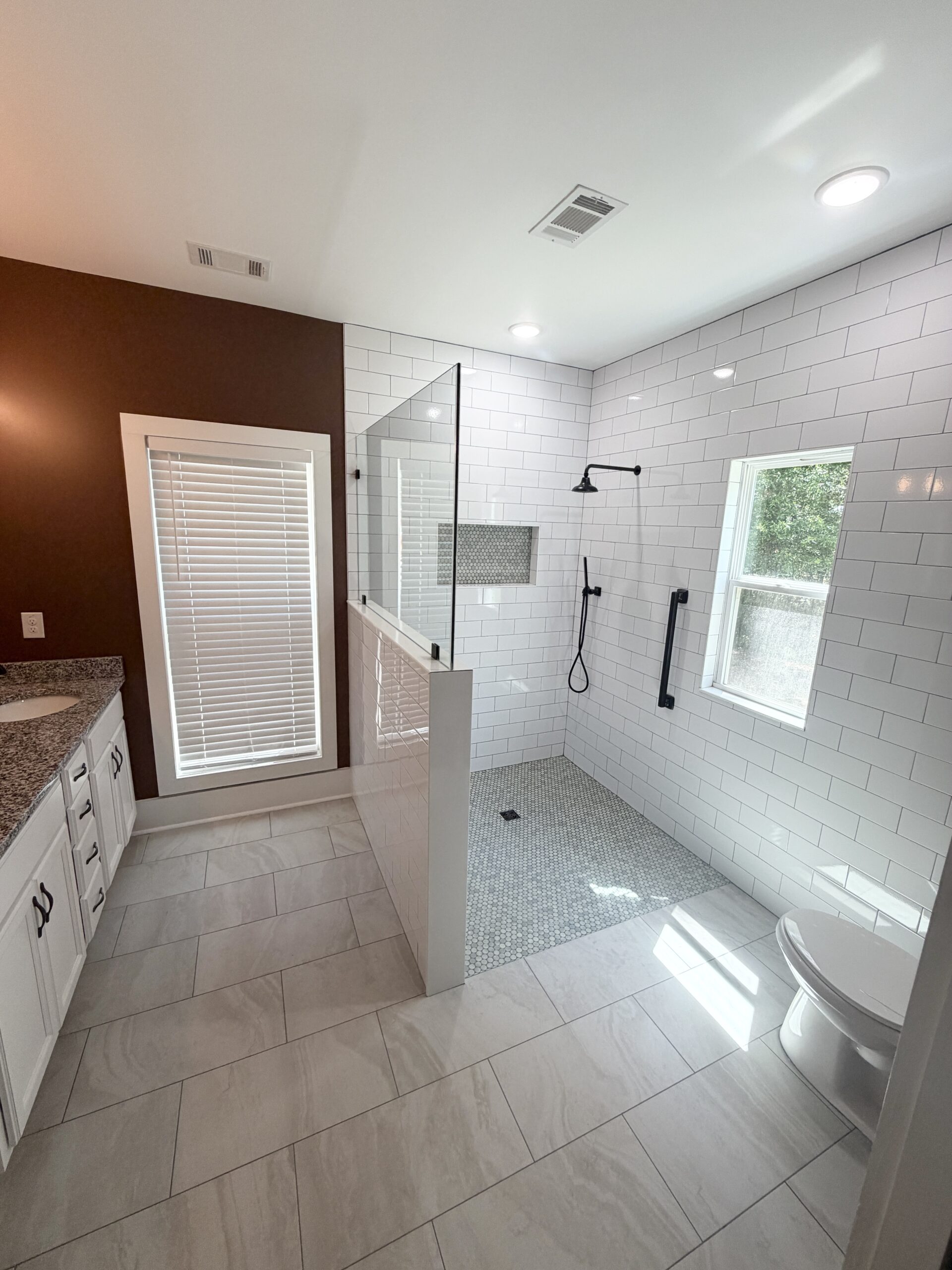

Adding a bathroom to an unfinished Georgia basement typically costs $15,000–$30,000, with plumbing — specifically how far you are from an existing drain line and whether you need a sewage ejector pump — being the single biggest factor in where you land in that range.
Why Basement Plumbing Is More Complicated Than Upstairs
Basement bathrooms sit below your home’s main sewer line in most cases, which means gravity can’t do the work of draining waste out to the street the way it does for bathrooms above grade. This is the core issue that shapes cost, timeline, and even whether an addition is feasible at all.
Gravity-Fed vs. Sewage Ejector Systems
If your basement floor sits above the level of your home’s main sewer line, a gravity-fed connection may be possible, which keeps costs closer to the lower end of the range. If it sits below that line — common in many Gwinnett County homes — you’ll need a sewage ejector pump system to lift waste up to the main line, which adds $2,500–$5,000 to the project.
Typical Cost Breakdown
- Plumbing rough-in (with ejector pump): $6,000–$10,000
- Plumbing rough-in (gravity-fed): $3,500–$6,000
- Electrical (lighting, ventilation fan, outlets): $1,500–$3,000
- Framing and drywall: $2,000–$4,000
- Finishes (tile, vanity, fixtures, toilet): $5,000–$10,000
Moisture and Ventilation: The Part People Underestimate
Because basement bathrooms sit below grade in a climate as humid as ours, proper exhaust ventilation isn’t optional — it’s the difference between a bathroom that stays dry and one that develops mold within a year or two. Code requires mechanical ventilation for any bathroom without an operable window, which describes the vast majority of basement bathrooms in this area.
We also recommend moisture-resistant drywall and a proper vapor barrier behind basement bathroom walls given the baseline humidity conditions common to Georgia clay soil foundations, even when the project budget is tight — it’s a poor place to cut corners.
Permitting
A basement bathroom addition requires permits in Gwinnett County for plumbing, electrical, and often the framing itself, since it adds finished square footage and living space to the home. This isn’t optional and it isn’t something to skip even in a basement that already feels “informally” finished.
Layout Considerations
Where possible, locating the new bathroom near existing plumbing — even if it’s one floor up — significantly reduces rough-in cost, since it shortens the run needed to tie into the main line. We map existing plumbing locations before finalizing any basement bathroom layout for exactly this reason; a bathroom positioned across the basement from the nearest stack can add thousands in pipe runs alone.
Timeline
A basement bathroom addition typically takes 4–7 weeks from permit approval to completion, including rough-in inspection, framing, and finish work. Ejector pump installations can add a few days to the plumbing phase specifically.
Frequently Asked Questions
Does a basement bathroom add value to a Georgia home?
Yes — a basement bathroom is one of the higher-return additions in this market, particularly when it supports a basement being marketed as additional living space or an in-law suite.
Can every basement support a full bathroom?
Nearly all can, though basements below the main sewer line require a sewage ejector pump system rather than a simple gravity connection. It affects cost, not feasibility.
How loud is a sewage ejector pump?
Modern ejector pump systems are reasonably quiet during normal operation — most homeowners describe it as a brief, low hum during flushing rather than a persistent noise.
Considering a basement bathroom? Hill Residential Contractors maps your existing plumbing and gives you an accurate cost range before you commit to a layout.