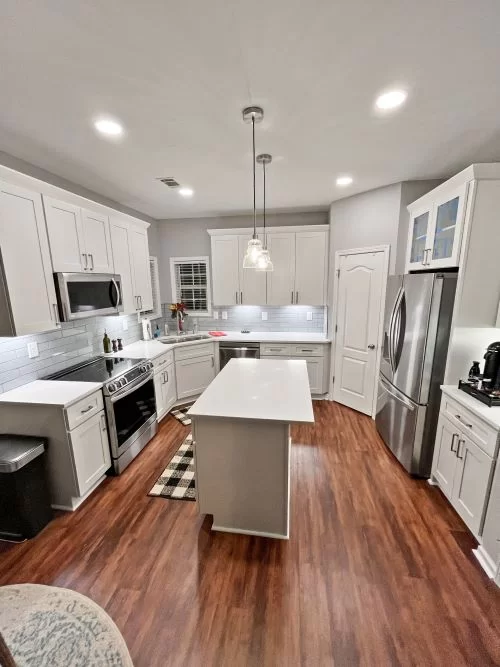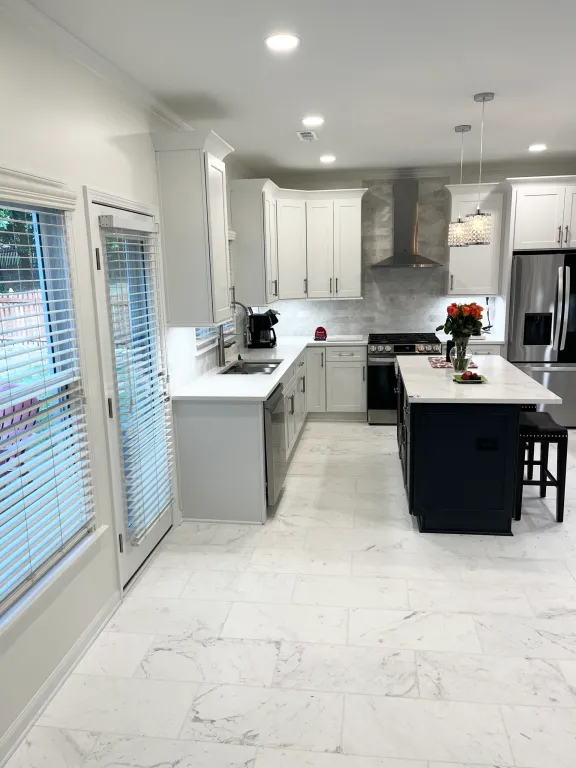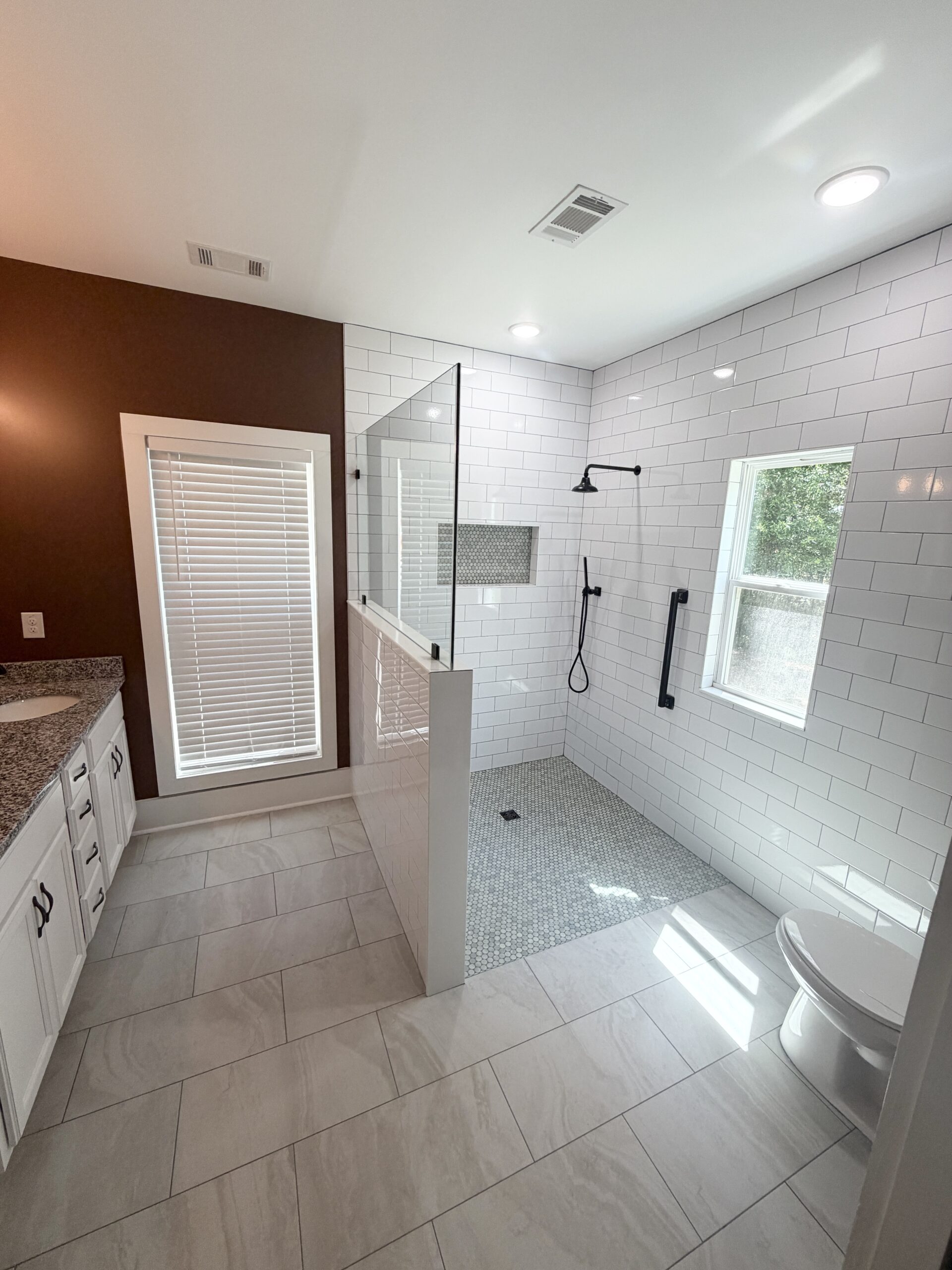

Between home renovation shows and endless YouTube tutorials, it’s easy to feel like a kitchen remodel is more approachable than it actually is. Some parts genuinely are — plenty of homeowners save real money doing certain tasks themselves. Other parts carry risks (safety, code compliance, and simply redoing expensive work) that make hiring a licensed professional the far cheaper option in the long run, even though it doesn’t feel that way upfront.
Here’s an honest breakdown of what’s reasonable to DIY, what shouldn’t be, and where the real hidden costs show up.
Tasks That Are Reasonable to DIY
- Painting cabinets or walls — time-consuming but low-risk, and a huge visual impact for the cost of paint and supplies
- Swapping cabinet hardware — pulls, knobs, and hinges are a straightforward weekend project
- Installing open shelving — as long as you’re anchoring into studs correctly, this is a manageable project for most homeowners
- Painting or refinishing an old backsplash with a specialty paint kit, as a temporary or budget-friendly refresh
- Removing old caulk and re-caulking around sinks and countertops
- Basic demo prep — clearing cabinets, removing drawer fronts, or pulling out old appliances before a contractor’s crew arrives, which can sometimes reduce labor costs if your contractor allows it
Tasks That Should Go to a Licensed Professional
- Electrical work. New circuits, moved outlets, or under-cabinet lighting wiring should go through a licensed electrician — beyond the safety risk, unpermitted electrical work is a common issue that surfaces during home inspections when you go to sell.
- Plumbing and gas line work. Moving a sink, adding a second prep sink, or relocating a gas range all require licensed trades and, in most areas including Gwinnett County, a permit.
- Structural changes. Removing or altering a wall — especially a load-bearing one — requires an understanding of your home’s framing that goes well beyond a weekend project, plus engineering and inspection sign-off.
- Cabinet installation for a full remodel. Cabinets need to be level, secured properly into studs, and aligned precisely for doors and drawers to function correctly — small errors compound quickly across a full kitchen.
- Countertop templating and installation. Stone and quartz countertops are heavy, precisely cut, and unforgiving of measurement errors. This is squarely a professional job.
- Anything requiring a permit. If your project needs a permit, it typically also needs a licensed contractor pulling it and standing behind the work.
The Hidden Costs of DIY Mistakes
The upfront savings of DIY can disappear fast once something goes wrong:
- Permit violations. Unpermitted electrical, plumbing, or structural work can create real problems at resale — buyers’ inspectors catch this, and it can hold up or kill a sale.
- Redo costs. Misaligned cabinets, uneven tile, or a countertop that doesn’t fit correctly often costs more to fix than it would have cost to do right the first time.
- Insurance complications. Damage caused by unpermitted or non-code-compliant work is sometimes excluded from homeowners insurance claims.
- Safety risk. Electrical and gas work done incorrectly isn’t just a code issue — it’s a genuine fire and safety hazard.
The Time and Tool Investment People Underestimate
Even for tasks that are technically DIY-able, most homeowners underestimate two things: how long it actually takes when you’re learning as you go, and how many specialty tools a proper job requires. A cabinet install that takes an experienced crew a few days can stretch into weeks of evenings and weekends for a first-timer — and that’s before accounting for tools (levels, jigs, a good miter saw) that aren’t worth buying for a single project.
A Middle Ground: Partial DIY With Professional Oversight
You don’t have to choose all-DIY or all-professional. Many homeowners save real money by handling the cosmetic, low-risk pieces themselves — painting, hardware, minor demo — while hiring a licensed contractor for electrical, plumbing, structural work, cabinet installation, and countertops. A good contractor will tell you honestly where that line makes sense for your specific project, rather than insisting on an all-or-nothing approach.
Frequently Asked Questions
Can I do my own kitchen demo to save money? Sometimes, yes — clearing cabinets and removing non-structural finishes is often fine to DIY. Just confirm with your contractor first, since some demo work (especially anything near plumbing, electrical, or gas lines) is safer left to the crew that will also be doing the rebuild.
Is it cheaper overall to DIY a full kitchen remodel? It can look cheaper on paper, but factoring in tool costs, the time investment, the risk of costly mistakes, and the value of proper permits and licensed work, most homeowners find a hybrid approach — DIY on cosmetic tasks, professional for everything structural, electrical, and plumbing — delivers the best real-world value.
How do I know if a wall in my kitchen is load-bearing? You generally can’t tell just by looking at it. A contractor or structural engineer needs to assess your home’s framing before any wall comes down — this is one of the clearest lines where DIY guesswork can turn into an expensive and dangerous mistake.
Trying to figure out what you can DIY and what needs a pro? Hill Residential Contractors gives homeowners across Gwinnett County and the Atlanta metro an honest assessment of where DIY makes sense and where it doesn’t — before any work begins. Schedule a free consultation or call (770) 568-0060.