
Replacing an old bathtub with a walk-in shower is one of the most popular ways to make a bathroom feel larger, more modern and easier to use.
But how much does a tub-to-shower conversion cost in Atlanta in 2026?
A straightforward conversion can start in the low thousands, while a completely custom tiled walk-in shower with upgraded plumbing, frameless glass and premium finishes can reach well into five figures.
The final cost depends less on simply removing the bathtub and more on what you build in its place.
What Does a Tub-to-Shower Conversion Cost in Atlanta?
For Atlanta-area homeowners, a tub-to-shower conversion may generally range from roughly $2,000 to $18,000+, depending on the scope and finish level.
Basic conversions using prefabricated shower systems typically cost less.
Custom conversions involving tile, waterproofing, plumbing modifications, niches, benches, frameless glass and premium fixtures cost more.
Your bathroom’s existing condition also matters.
If demolition reveals water damage, damaged subflooring or outdated plumbing, those issues should be repaired before the new shower is installed.
What Is Included in a Tub-to-Shower Conversion?
A professionally completed conversion can involve much more than removing a tub.
Depending on the project, work may include:
- Bathtub removal
- Demolition of existing wall finishes
- Plumbing adjustments
- Drain relocation
- Shower valve installation
- Subfloor inspection and repair
- Waterproofing
- Shower pan installation
- Wall tile
- Floor tile
- Shower niche
- Bench seating
- Grab bars
- Shower doors
- Frameless glass
- Painting and trim
The more customized the design becomes, the more labor and material costs increase.
Prefabricated Shower vs. Custom Tile Shower
One of the biggest cost decisions is whether to install a prefabricated shower or build a custom tiled shower.
Prefabricated Shower
A prefabricated shower typically uses acrylic or fiberglass panels manufactured in standard sizes.
Advantages include:
- Lower initial cost
- Faster installation
- Fewer grout lines
- Easier cleaning
For homeowners primarily focused on practicality and budget, a quality prefabricated system can work well.
Custom Tile Shower
A custom tile shower gives you far more design flexibility.
You can choose:
- Tile size
- Pattern
- Shower dimensions
- Built-in niches
- Benches
- Accent walls
- Curbless entries
- Linear drains
- Frameless glass
Custom tile installations take more time because proper waterproofing, tile setting and finishing require multiple steps.
How Much Does a Walk-In Shower Cost in Atlanta?
A walk-in shower installation in Atlanta can vary widely.
A standard shower conversion may stay toward the lower end of the budget, while a large walk-in or curbless shower with custom tile and frameless glass may cost substantially more.
Factors that affect walk-in shower cost include:
- Shower size
- Tile selection
- Glass type
- Plumbing changes
- Drain type
- Shower controls
- Accessibility features
- Waterproofing method
- Existing bathroom condition
Do not compare two estimates based only on total price.
Ask what waterproofing system, tile preparation, plumbing work and glass are included.
Those details often explain why two quotes are different.
Does the Drain Need to Be Moved?
Not always.
Many tubs and showers use different drain locations, so converting a bathtub to a shower may require adjusting the plumbing.
Moving a drain can increase cost because the contractor may need to access the floor and modify the drain line.
The exact work depends on the existing plumbing and the location of the new shower drain.
This is one reason an on-site inspection is more useful than trying to estimate an entire bathroom renovation from photos alone.
Should You Choose a Curbless Shower?
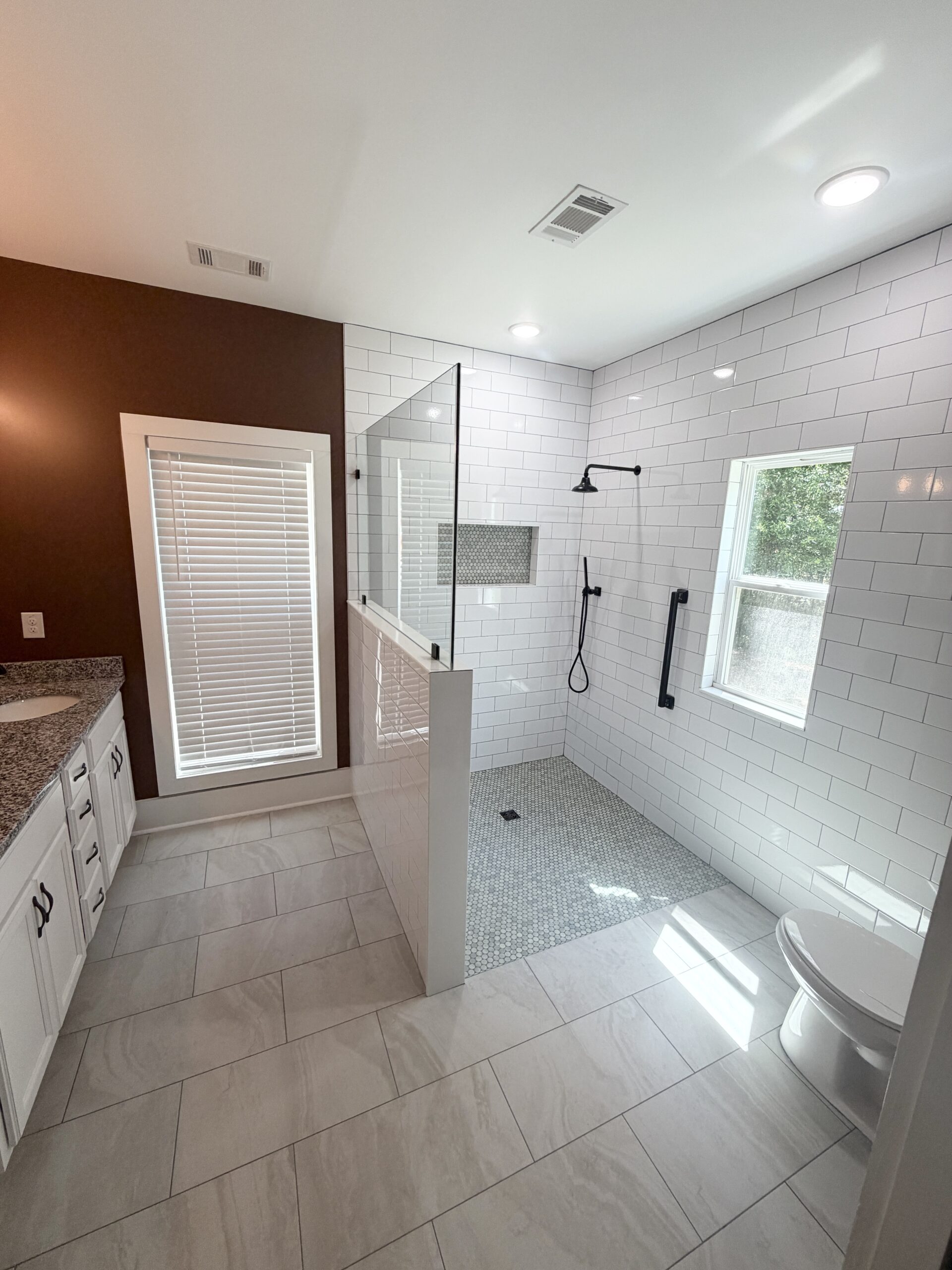
Curbless showers have become increasingly popular because they create a clean, open appearance and can improve accessibility.
Instead of stepping over a traditional shower curb, the bathroom floor transitions more smoothly into the shower.
However, a true curbless shower requires careful planning.
Proper floor slope, waterproofing and drainage are critical.
In some bathrooms, structural or floor modifications may also be necessary to create the required slope.
Do You Need a Permit for a Tub-to-Shower Conversion in Georgia?
Permit requirements depend on where the property is located and what work is being performed.
Projects involving plumbing, electrical or structural modifications may require permits and inspections.
Because cities and counties can have different requirements, homeowners should confirm the rules with their local building department before work begins.
A qualified remodeling contractor can help determine which permits apply to the specific project.
How Long Does a Tub-to-Shower Conversion Take?
A basic conversion can sometimes be completed relatively quickly, but a custom shower requires more time.
A more involved project can include:
- Demolition
- Plumbing work
- Subfloor preparation
- Waterproofing
- Inspections where required
- Tile installation
- Grouting
- Fixture installation
- Glass measurement and installation
- Final finishing
If the tub-to-shower conversion is part of a complete bathroom remodel, the entire project naturally takes longer.
Hill Residential Contractors notes that full bathroom remodeling projects can typically run approximately two to six weeks depending on scope.
Will Converting a Tub to a Shower Hurt Resale Value?
Not necessarily.
Many buyers prefer large walk-in showers, particularly in primary bathrooms.
However, if your home has only one bathtub, removing it is worth considering carefully.
Families with small children may prefer having at least one tub in the home.
A common strategy is to install a walk-in shower in the primary bathroom while keeping a bathtub in a secondary bathroom.
That provides modern functionality without removing every tub from the house.
Is a Tub-to-Shower Conversion Good for Aging in Place?
It can be.
Stepping over a high bathtub wall can become difficult for people with limited mobility.
A walk-in or curbless shower can be designed with features such as:
- Grab bars
- Handheld shower heads
- Built-in seating
- Slip-resistant flooring
- Wider entrances
- Low or zero thresholds
Accessibility should be considered during the planning stage rather than added as an afterthought.
How Can You Control Tub-to-Shower Conversion Costs?
The best way to control costs is to establish the scope before demolition begins.
Decide early on:
- Shower size
- Tile
- Fixtures
- Glass
- Storage niches
- Bench seating
- Drain type
- Accessibility features
Changing materials or layout halfway through construction can add both cost and time.
Frequently Asked Questions
How much does it cost to convert a tub to a shower in Atlanta?
A basic conversion can start in the low thousands, while a large custom tiled walk-in shower can cost $10,000 or more. The final price depends on materials, plumbing, size and customization.
Is a tub-to-shower conversion worth it?
It can be a valuable upgrade if your household rarely uses the bathtub or wants a more accessible, modern shower.
How long does a tub-to-shower conversion take?
Simple projects can be completed faster, while custom tile showers or full bathroom renovations may require several weeks.
Can you convert any bathtub into a walk-in shower?
Most bathtub areas can be converted, but plumbing location, room dimensions and floor structure should be evaluated first.
Is a curbless shower more expensive?
Often, yes. Curbless designs may require additional floor preparation, drainage planning and waterproofing.
Planning a Bathroom Remodel in Gwinnett County?
Hill Residential Contractors provides bathroom remodeling services throughout Gwinnett County and North Atlanta, including walk-in showers, curbless showers, custom tile, vanities, plumbing, electrical upgrades, waterproofing and complete bathroom renovations.
The best tub-to-shower conversion is not simply the one that looks good on installation day. It should be waterproof, functional, easy to maintain and designed around how you plan to use the bathroom for years to come.