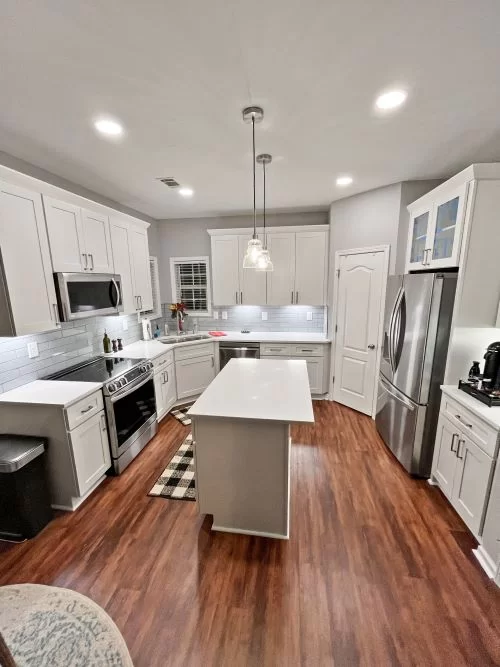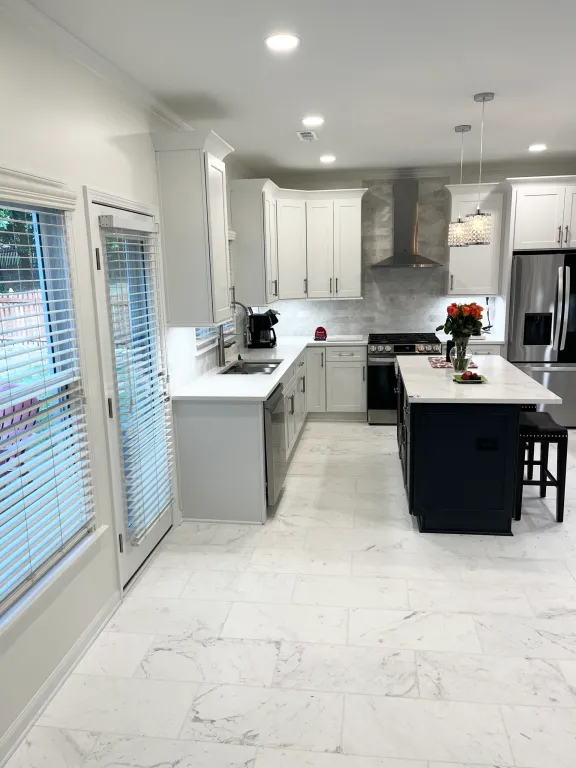

Gwinnett County has some of the fastest-growing, most varied housing stock in the Atlanta metro — decades-old ranches in Norcross, 1990s and 2000s subdivisions in Suwanee and Buford, and newer builds in Sugar Hill and Peachtree Corners. That mix means there’s no single “right” kitchen remodel here. What works for a 30-year-old home in Lawrenceville is often very different from what makes sense in a newer townhome in Duluth.
This guide covers what homeowners in Gwinnett County actually need to know before starting a kitchen remodel — from cost expectations to permits to picking the right contractor.
What Does a Kitchen Remodel Cost in Gwinnett County?
Pricing varies widely based on kitchen size, scope, and material selections, but as a general guide for 2026:
- Cosmetic refresh (new paint, hardware, backsplash, maybe countertops): roughly $10,000–$25,000
- Mid-range remodel (new cabinets, countertops, flooring, lighting, no layout changes): roughly $25,000–$60,000
- Full gut renovation (layout changes, custom cabinetry, high-end finishes, appliances): $60,000–$100,000+
Georgia’s construction costs tend to run somewhat below the national average, though demand in the North Atlanta and Gwinnett County market keeps labor pricing competitive. Cabinetry is usually the single largest line item in any remodel budget, typically 30–40% of total project cost, followed by countertops, appliances, and labor. The only way to get a number you can actually plan around is a walkthrough and a written estimate — anything you read online, including this guide, is a starting point, not a quote.
Do You Need a Permit to Remodel Your Kitchen in Gwinnett County?
In most cases, yes — if your project involves electrical, plumbing, gas line, or structural work (like moving a wall or changing your layout), Gwinnett County will require a permit. Purely cosmetic work, like painting cabinets or swapping a faucet with no line changes, generally does not. Permit requirements are enforced at the county or municipal level, so requirements can differ slightly depending on whether your home falls under unincorporated Gwinnett County or a city like Suwanee, Duluth, or Lawrenceville that handles its own permitting.
A licensed local contractor should be pulling and managing these permits as part of your project — if a contractor tells you permits aren’t necessary for work that clearly involves electrical or plumbing changes, treat that as a red flag.
What Gwinnett County Homeowners Are Choosing Right Now
A few patterns show up consistently in kitchens we’re remodeling across the county this year:
- Two-tone cabinetry — light perimeter cabinets paired with a contrasting island color
- Quartz countertops for durability against daily use and Georgia’s humidity
- Larger islands with seating, especially in homes where the kitchen doubles as the main gathering space
- Layered lighting — under-cabinet, pendant, and recessed on separate controls
- Opening up galley or closed-off kitchens into adjoining dining or living spaces, especially in older ranch-style homes common throughout Norcross, Tucker, and Lawrenceville
Older Home vs. Newer Home Remodels
Older Gwinnett County homes (1970s–1990s ranches and traditional builds) often need some combination of: updated electrical to support modern appliances, layout changes to open up a closed-off kitchen, and finish updates to move away from original oak cabinetry and laminate counters. These projects sometimes uncover surprises — outdated wiring, water damage, or non-standard framing — once walls are opened up, which is why a contingency budget is worth planning for.
Newer homes (2000s and later builds in areas like Suwanee, Buford, and Peachtree Corners) usually have layouts and systems that are in better shape, so remodels tend to focus more on finish-level upgrades: cabinetry, countertops, lighting, and appliances, rather than structural or systems work.
Questions to Ask Before Hiring a Kitchen Remodeling Contractor
- Are you licensed and insured to work in Gwinnett County specifically?
- Will you pull permits, or is that my responsibility?
- Can I see photos of completed kitchen projects in this area?
- What’s included in your written estimate, and what typically comes up as an added cost?
- Who will be my point of contact throughout the project, and how often will I get updates?
- What’s your estimated timeline, and what could realistically extend it?
A contractor who answers these clearly, in writing, before you sign anything is a good sign. Vague answers on cost, timeline, or permits are worth pushing back on.
Frequently Asked Questions
How long does a typical Gwinnett County kitchen remodel take? A mid-range remodel without major layout changes typically takes 6–10 weeks from demolition to final walkthrough. Projects involving structural changes or custom cabinetry can run 3–4 months.
Does a kitchen remodel actually add value to a Gwinnett County home? Yes — kitchen remodels are consistently among the higher-return renovation projects, and mid-range updates tend to recoup a strong majority of their cost at resale, though the exact return depends on your neighborhood and the local market at the time you sell.
Which Gwinnett County cities does Hill Residential Contractors serve? We work with homeowners throughout Duluth, Suwanee, Lawrenceville, Buford, Norcross, Sugar Hill, Peachtree Corners, and surrounding communities, along with the broader Atlanta metro including Alpharetta, Roswell, Milton, Johns Creek, Dunwoody, Sandy Springs, Brookhaven, Buckhead, Cumming, Braselton, and Tucker.
Planning a kitchen remodel in Gwinnett County? Hill Residential Contractors is committed to quality, transparency, and honest communication from your first consultation to the final walkthrough. Schedule your free consultation or call (770) 568-0060 to get a real estimate for your home.